Plate I · 2016
Regional Integration in Africa & Beyond: from Theory, Political Alliance to Interdependence · Volume I
Co-editor · Digit Link Xtra Ltd., Abuja
ISBN 978 · 978 · 61580 · 28
Chapter 02
Nineteen years at the bank, and the standard she set inside them.
1991 to 1998
Everybody runs from the auditors. She helped them.
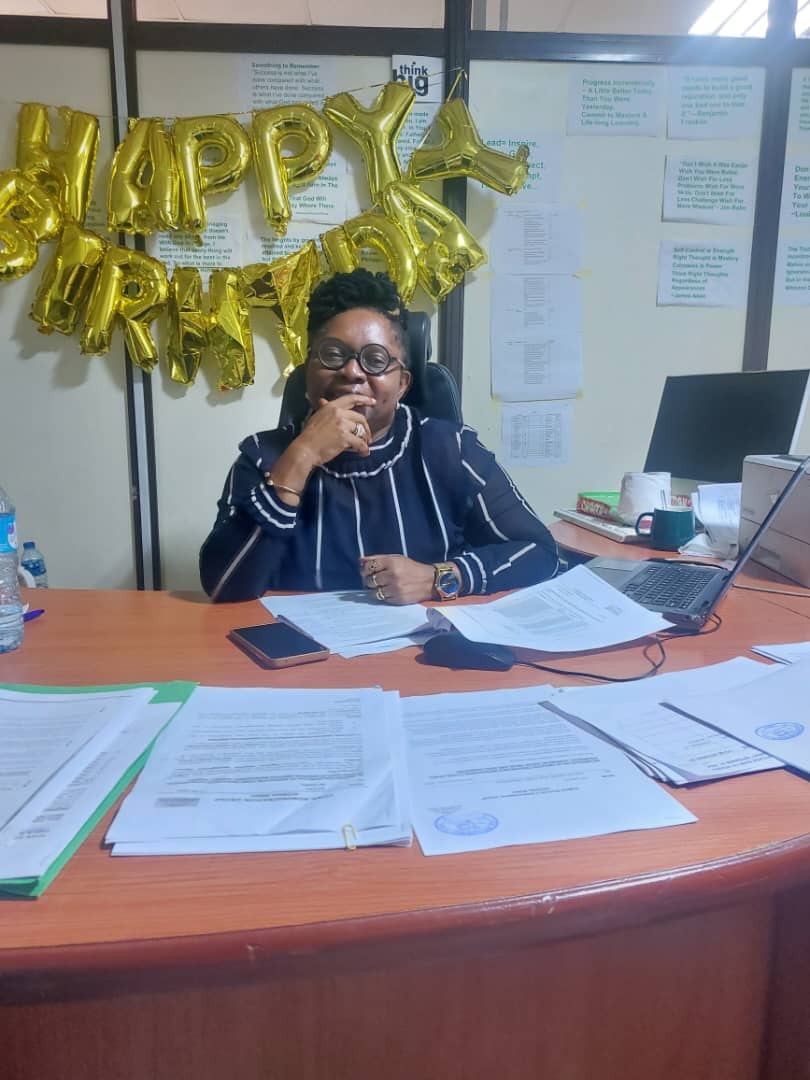
I went to Lagos in 1991, shortly after my service. In the east we didn't know much about these professional exams; it was when I got to Lagos that I got to know. When I realised I was having difficulty getting a job, I bought the ICAN form in 1991.
I had that ICAN form until 1996, when I ran into the partner of Ijeoma and Ijeoma. They came to audit one of the small places I worked. You know the way it is with auditors, people are always running away from them. But I happened to be the one who was willing to help, again in the bid to give service. I would help them do some calculation, help them get what they needed.
So one of those days the partner asked me: have you ever considered doing ICAN? I said yes, I have bought this ICAN form for almost six years now. He said, what was the problem? I said the challenge is that I don't know anybody in Lagos, any accounting firm, that will sign the form.
Mr Ijeoma said: no, my firm will do it for you. Just go and process the form. And immediately, again, the ability to take a decision; I moved. I registered for the foundation exam for the first time in 1996, and Ijeoma and Ijeoma signed my form. Do you know that they continued signing my form until 1998, when I qualified?
That really shaped my life. I could probably have carried that form until only God knows when I would run into somebody ready to sign it.
I could have carried that form until only God knows when.
02 · i
A banker's life, entered the way a bank enters value.
Service passbook
Account of Dr. Oby Nwokedi · opened Aug 2007 · closed 30 Aug 2026
Group Head
Chairperson
September 1999
The question that decided her career, and the answer she had not planned.
I still remember my first day at work, in Gulf Bank, in September 1999. That was shortly after I qualified as a chartered accountant.
When I qualified, the mentor who signed off my ICAN form all through the time I wrote the exam told me that the problem I was going to have was lack of experience. Of course I didn't have banking experience. I didn't have auditing experience. I had also not worked in an accounting firm. He told me they wouldn't mind giving me a reference if I needed it.
So when I attended the Gulf Bank interview, I passed the first stage, and the final stage was to see the MD. When I saw the MD one on one, he asked me: do you have banking experience? In my mind I was trying to ruffle it and say yes. But this is where all these values I have learned over the years as a child came into play. Something quickly told me: so what if I say yes, I try to wiggle it, and then he asks me a technical question? I won't be able to answer it, and that will even be worse.
So I simply told him no. He said, okay, have you worked in an auditing firm before? I said no. Have you worked in an accounting firm before? I said no. He said: so what do you know? Honestly, I will never forget that. So what do you know?
I said, well sir, I may not have the practical experience, but I have the theoretical knowledge. I read political science, and I am a chartered accountant, so I have a broader perspective to issues. And I said, in any case sir, with all due respect, nobody is ever really taught how to count money in the school. Honestly, I didn't know how that statement came to me.
Two weeks later I got a call from the HR that I had been successful, I should come and pick my employment letter. When I went there, the HR was asking me: so do you know the MD before? I said no. As a matter of fact, I don't know anybody in Gulf Bank. He said the committee had recommended me for a starting level, the banking executive. But when they took it to the MD to sign off, the MD said they should start me off as an assistant manager.
Nobody is ever really taught how to count money in the school.
2007 to 2026
19
Years at the bank
August 2007 to August 2026
5
Years of accounts cleared
In under three years
4
Groups led as Head
FINCON · Risk · Treasury · Loan Admin
3
Committees chaired
Reconciliation · Core Banking · Recovery
3 volumes · 16 papers
In her own words: three published textbooks, co-edited and co-authored with her professors — and sixteen papers written with her professors and colleagues, from COMESA to the Law of the Sea, in the evenings of a full banking career.
Plate I · 2016
Regional Integration in Africa & Beyond: from Theory, Political Alliance to Interdependence · Volume I
Co-editor · Digit Link Xtra Ltd., Abuja
ISBN 978 · 978 · 61580 · 28
Plate II · 2017
Regional Integration in Africa & Beyond: from Theory, Political Alliance to Interdependence · Volume II
Co-editor · Digit Link Xtra Ltd., Abuja
ISBN 978 · 978 · 61580 · 28
Plate III · 2018
Readings in Diplomacy
Co-author · Tabith Publishers Ltd., Abuja
ISBN 978 · 978 · 54800 · 5 · 4
Peer-reviewed · 2015 – 2021
Nº 012021
Journal of International Relations, Security and Economic Studies (JIRSES) · Vol. 1, No. 4
Nº 022021
Journal of Advanced Research and Multidisciplinary Studies · Vol. 1, Issue 1, pp. 129–141
Nº 032020
International Journal of Conflict Management · Vol. 1, Issue 1, pp. 1–17
Nº 042020
Nile Journal of Political Science · Vol. 1, Issue II, pp. 19–33
Nº 052019
Global Journal of Political Science and Administration · Vol. 7, No. 4, pp. 13–29
Nº 062019
Department of History and International Relations, Veritas University, Abuja
Nº 072019
International Journal of Innovative Research and Development · Vol. 8, Issue 4
Nº 082019
Global Journal of Political Science and Administration · Vol. 7, No. 2, pp. 1–11
Nº 092018
Veritas Journal of Religious Studies (VEJOREL) · Vol. 1, No. 1
Nº 102018
Port-Harcourt Journal of History & Diplomatic Studies (PJHDs) · Vol. 5, No. 3
Nº 112018
IOSR Journal of Humanities and Social Sciences · Vol. 23, Issue 12
Nº 122018
ICHEKE: Journal of the Faculty of Humanities, Ignatius Ajuru University of Education · Vol. 16, No. 3
Nº 132018
International Journal of Current Aspects (IJCAB) · Vol. 2, Issue 7, pp. 94–108
Nº 142018
International Journal of Current Aspects (IJCAB) · Vol. 2, Issue 5, pp. 1–11
Nº 152016
Journal of Development and Society · Vol. 3, No. 4
Nº 162015
International Journal of Multidisciplinary Research and Modern Education (IJMRME) · Volume I, Issue I
Sixteen papers · three volumes · written after hours · 2015 – 2021
The first month
Ninety thousand naira, a boss who would not teach her, and a promise made on the floor.
My first day at work I came with a lot of excitement. One was that when I saw my pay slip, my salary then was ninety thousand. I almost collapsed, because I was coming from a background of five thousand naira per month. Of course, then money had value. One of the things that came to my mind was: my mum will be happy, and I will be able to take better care of my siblings. At that point the three of them had also moved on, and they were in the university.
It was a mixed feeling. A lot of excitement, but I was also a little bit nervous about the people I was going to meet, who would be my supervisor, my superiors. And considering the fact that I lacked the practical knowledge. Yes, I read the accounting all at a go and got it, but in terms of practical experience I didn't have it.
My immediate boss was, would I say, a little bit mischievous. When I was introduced to him and he asked what my level was, I said I was an assistant manager. Incidentally, he too was an assistant manager. I think that was where my drama started. When he gave me assignments, of course I didn't have that experience, so the tendency was to keep asking questions. And he would tell me: are you not an assistant manager? You go figure it out.
My first one month was really very tough, because he wasn't cooperative. His answer was always: are you not an assistant manager? I realised that me being an assistant manager, he felt perhaps threatened. But I honestly ignored him and went all in to learn, to ask questions. I made a friend there who was also ready to help and put me through.
There was something they called proof of account. I found it a little bit difficult grasping that, and my immediate superior was not forthcoming. He kept threatening me that they had assigned a branch to me, and if anything happened to that branch I was going to go in for it. So I remember one day I got home, and I cried. I cried so much. I just told God: please help me.
And I also remember that that night I told God one thing: that anybody that I have the privilege of coming across, I will teach the person. I won't hoard knowledge. I guess my prayer paid off, because a couple of days after, something I had struggled over for one month, I was able to grasp it.
Anybody that I have the privilege of coming across, I will teach. I won't hoard knowledge.
Weeks later
Weeks after she was told to go and figure it out, they sent her on an investigation.
When I got it, I was sent to the Abuja branch for an audit investigation. Me, that was a new staff, was able to track a fraud that was committed about three years ago. And guess who was overseeing the branch at that time? My immediate boss.
I came back, I wrote that report. Everybody was shocked, because they kind of assumed that I hadn't found my feet yet, but I was able to get that. Somehow we were able to recover the money, and the money was much, because as at that time we are talking about three hundred thousand.
Honestly, that gave me the confidence to push in, and to as much as possible go all out to learn outside my department, which was internal audit.
02 · ii



2005 to 2007
Promoted in the month it was scheduled for liquidation, with every naira she owned inside it.
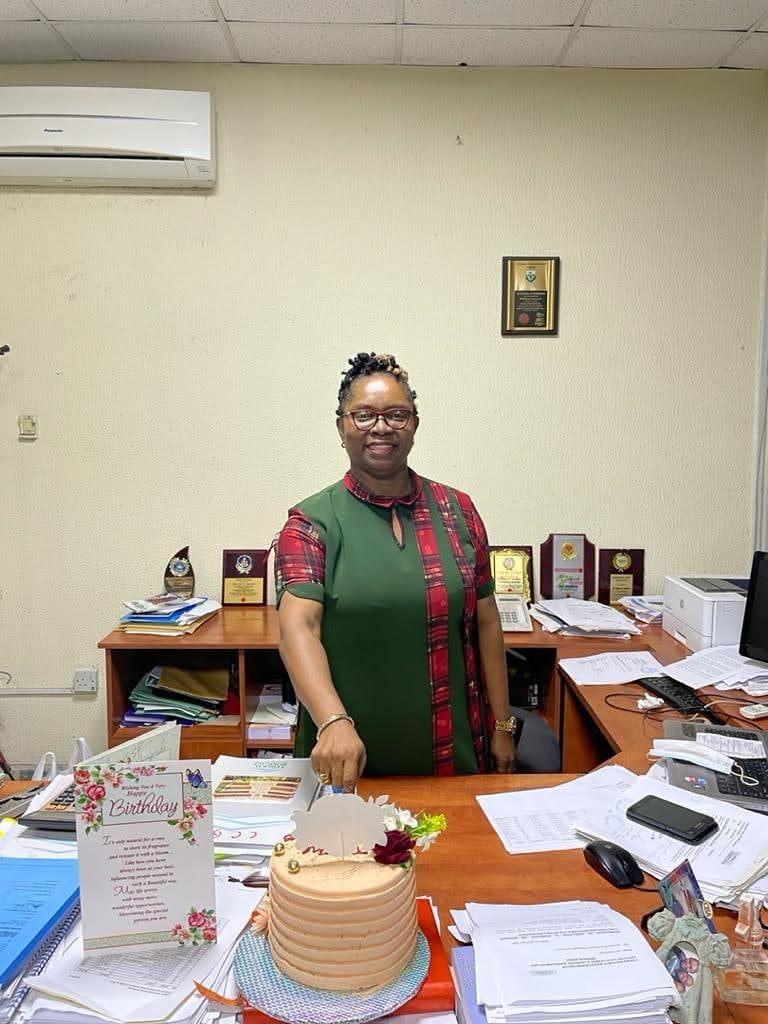
The most difficult period of my career was when my bank, Gulf Bank, got liquidated. This was the bank that gave me the opportunity to start off my professional career as a banker, and at a managerial level. So it was very personal to me.
The banks were to recapitalise in 2005, and we couldn't make that recapitalisation, and we were scheduled for liquidation. In December 2005 people were asked to leave the bank. But interestingly, in that December 2005, three people were promoted in the bank, and I was one of the three. By about the third week of December almost everybody was asked to go. The three of us remained.
When the NDIC took over in January, I was among the ones retained. I was retained to oversee the northern region, so that if they had any question I could provide those information.
Gulf Bank being liquidated was a huge blow. But another challenge was that I didn't have savings in any other bank. I was saving in Gulf Bank. And I didn't take any loan. So when Gulf Bank went under, I could see the money I have in the bank, but I couldn't get it. That was also a big lesson learned.
From January 2006, when NDIC took over, I earned salary as a branch manager. I was there up until August 2007, when I left to join Federal Mortgage Bank. And going from the learnings of the Gulf Bank liquidation, I told myself that any next organisation I get into, if they have opportunity for staff loan, I am going to take all the loan possible. That is exactly what I did. I joined Federal Mortgage Bank in August. By September I had done my National Housing Fund mortgage loan, and there were a couple of staff loans available. Honestly, I took all of them.
The issue here, I must clear, is not just taking loan, but you must be able to invest that loan properly. That loan must be able to yield return. That is the only way it can make sense.
I could see the money I have in the bank, but I couldn't get it.
FINCON · 2013 to 2018
5
Years of audited accounts in arrears, cleared in under three.
The bank changed its organisational structure and created the FINCON Group, five units under one head, and the accounts came with it, five years in arrears. She headed the taskforce, thirty people drawn from every group in the bank, working holidays, nights and weekends, and saw new reporting standards adopted with the systems beneath them proven.
The FINCON Group, as the restructure drew it
It wasn't me. Mine was to provide the direction. It was these young people who coordinated it, at that time they were contract staff, but they worked more and better than the full-time staff.
Recorded, August 2026
Take the decision, let it be a wrong one, rather than take no decision at all, or delay.
My father wanted me to go to Nsukka, but that would have been the same locality. So I filled the JAMB form myself and put University of Jos. I think that was one of the times I rebelled against my father's decision.
I had wanted to read law; because of catchment I was given political science. When I finished service, what employers kept asking for was accounting. So I said: let me go and do this accounting. That was when I found I had a flair for figures; I had never done accounting in secondary school or at university, and I passed my papers once.
My daughter was one month old. Gulf Bank had been liquidated; I was one of three people retained by NDIC, and I knew that was coming to an end too. Class started at 7 a.m. and didn't close until 9 p.m., all the way from Kubwa to Wuse 2. I would breastfeed, extract the milk, and come back at nine for the bonding. I wrote that exam once.
I didn't have the opportunity of knowing any big man in society who could put in a word. So it had to be between me and God, and between me and the people I meet. Most of the favours and support I got came from people I never knew from anywhere.
What I went through with my siblings is what informed my decision to spend time mentoring young people. Everybody looked up to me. I had to provide that father figure.
Finding my voice in a male-dominated professional environment was a little bit of an issue. But I wasn't scared, because my father prepared me. He used to tell me: ask questions, speak up. The most that can happen is that people will laugh at you, but you would have received the information you were seeking.
My father taught me that anything that doesn't concern you, don't get involved. So I honestly don't care what you think or what you say. As long as you don't bring it to my attention, I assume that it doesn't exist. I was able to shut down on all of that office gossip, office politics.
In finance we were at the National Assembly almost every day for one thing or the other. You have the external auditors, the Auditor-General, the NDIC, the office of the Accountant-General of the Federation, the CBN examiners, the tax auditors, all sorts. In the midst of all that, God gave me the grace to remain calm.
My life was shaped not only by the opportunities I received, but by the decisions I made when the opportunities came.
Some people work to meet targets. She worked to set them.
First to arrive, last to leave · FINCON
On leadership
Principle over popularity, and living with what it cost her.
One of the hardest professional decisions I had to make was to stand by a decision I believed was right, even when it was unpopular, or when it meant disappointing people I respected.
I had to balance choosing my principle over popularity, over making people I respected happy. I can reasonably say that the people I worked with in FMBN would attest to that, even in meetings. I am grateful to God that He has given me wisdom to sometimes know how to present these things without being disrespectful.
Putting the organisation above personal relationships. Learning that professional responsibility sometimes requires that I separate friendship from official duty. My dad also did a lot of that with me. Sometimes my dad would punish me irrespective of the fact that I am his favourite, and he would tell me the reason why. At home my children too know that if rules are set and you go against that rule, there are consequences, there are sanctions, and Mommy must enforce those sanctions.
One of the things I try to do is first of all to have a discussion. From the discussion I document that, and then I nicely try to put my position across.
But I tell you, it is not an easy thing. As a leader you must take those difficult decisions. You can't run away from it. You can't shy away from that responsibility. I am living with the consequences of certain actions and decisions that I made in the course of my career. For a couple of them it may not go well with the seniors and the powers that be, but that is what it is. And we were able to push through, really, to the glory of God.
As a leader you must take those difficult decisions. You can't shy away from that responsibility.
Recorded, August 2026
Emotional intelligence is the bridge between success and legacy.
Seeing people I mentored struggle and eventually overcome and become better is my greatest achievement. The greatest thing you can do is to leave people better than they met you.
They won't remember your title, your designation, the deadlines that you achieved, the decisions that you took. They remember how you made them feel.
02 · iii
She is honest with her contributions; you can see sincere love for the bank.
She speaks truth boldly, in love, to power.
I never heard her speak ill of anyone. I never saw her cut a corner or take credit for someone else's work.
Even when there's something she doesn't know, she is never too proud to ask a junior staff to teach her.
What comes next · from 30 August 2026
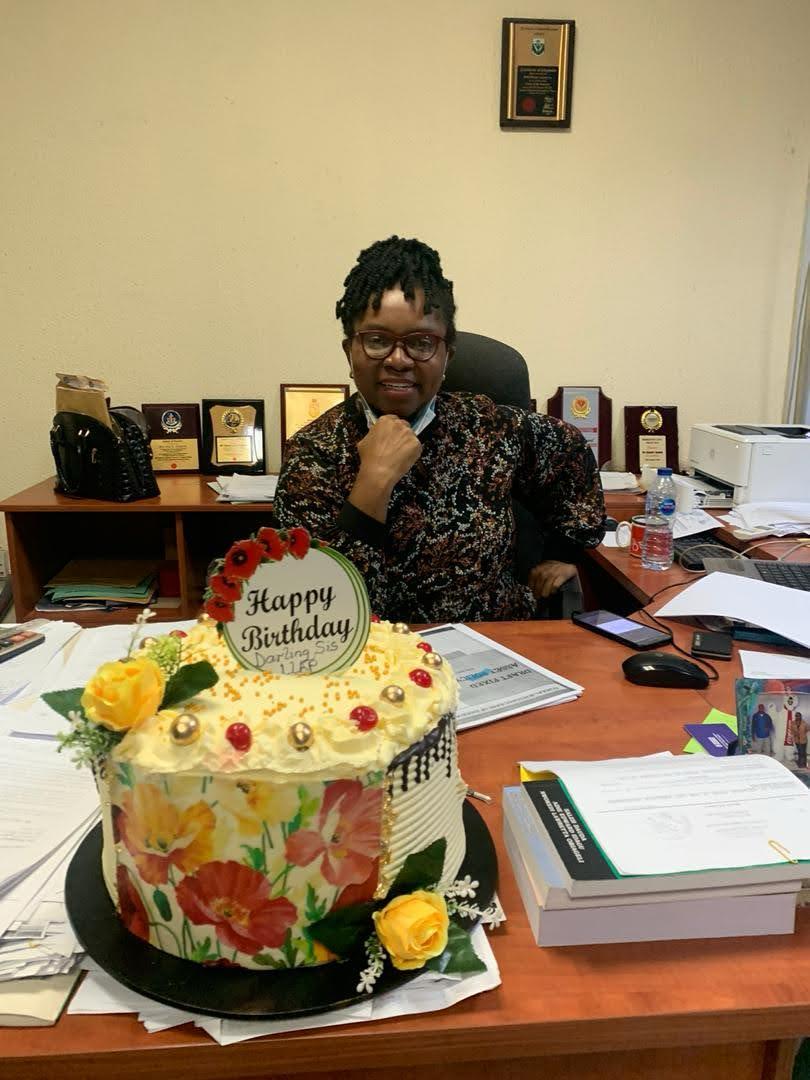
Retirement is not a full stop; it is a comma in a sentence that keeps unfolding.
“She will choose more work to humanity.”
CJ Okereke
“Continue to do what you know best, impacting people's lives.”
Cosbey
“You have served well. Now it is your time to be served, and celebrated.”
Ada Aneke
The story keeps going.