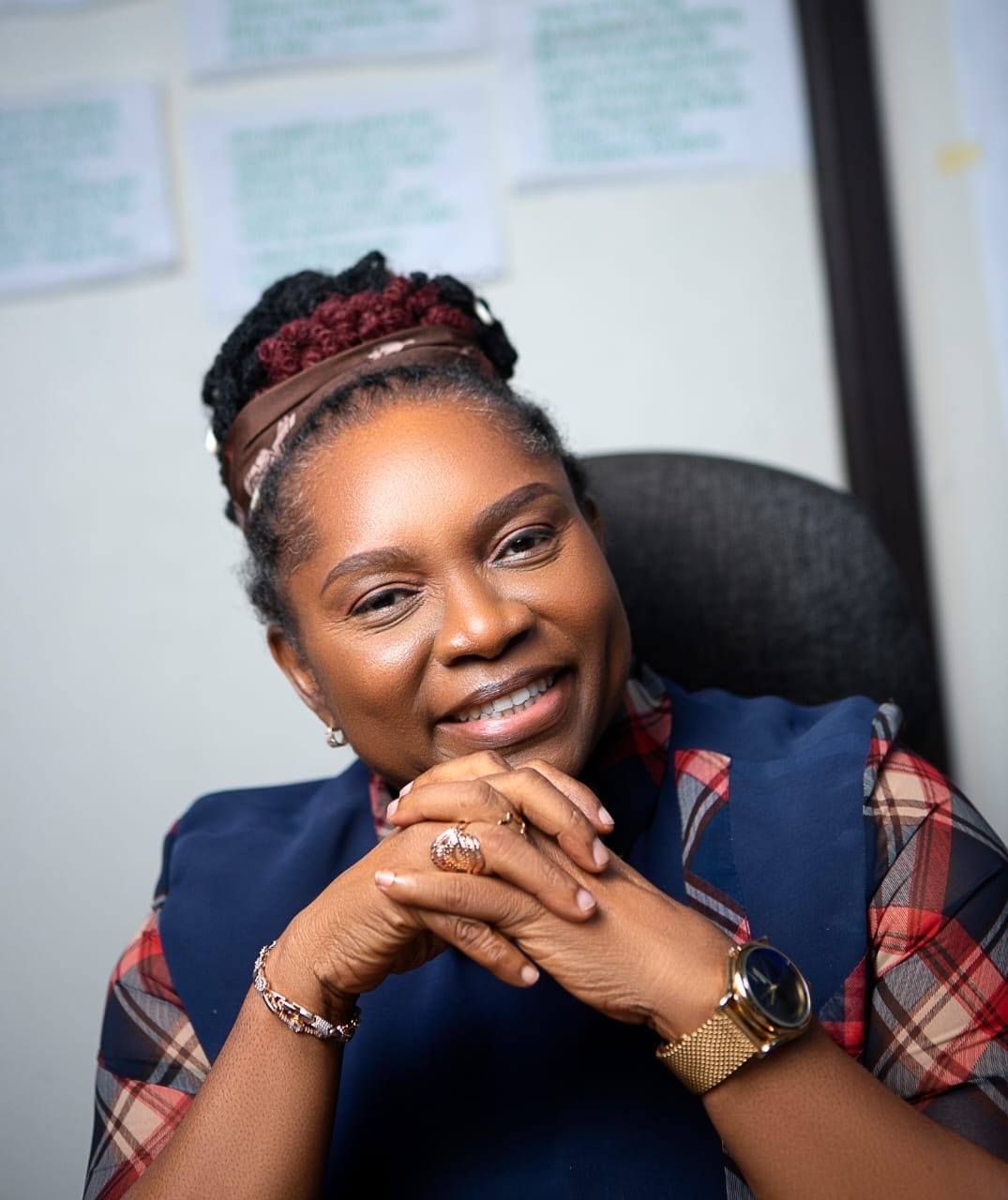
Dr. Oby NwokediThe Jubilee · 60

Chapter 01

Her Story

A childhood, a bold change of course, and a doctorate at sixty.

Sixty years, under one thumb

1966 – 2026

Drag the gold bead — her whole life runs along this thread.

1966
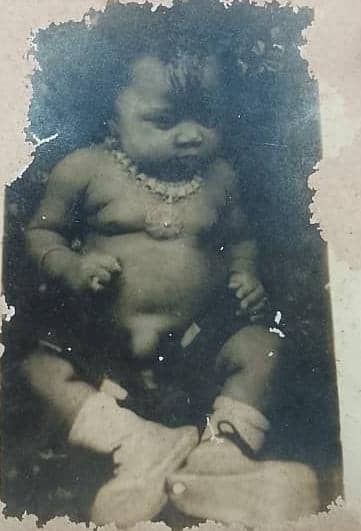
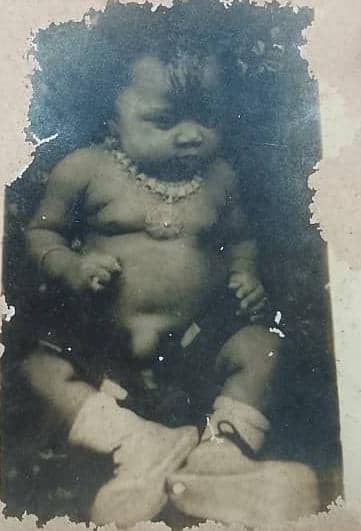
A worn black and white photograph of Oby as a baby, wearing a beaded necklace

1966

Born in Onitsha

Fourth of seven children, and the first daughter, in a Christian house that was peaceful, loving and strictly run.

0112

Where the story opens

Onitsha,Anambra State.

Born 30 August 1966, sixty years to the day before the Grande Finale.

She was born in Onitsha in 1966, fourth of seven children and the first daughter, into a Christian house that was peaceful, loving and strictly run. Her father, Nnanyelugo Azubuike Alexander Attoh, had served briefly in the police and retired early; she never knew him as a working man, only as a private one managing his investments, fixed deposits, shares, a few properties, and doing it with the precision of someone who believed in planning. Her mother, Nwaakwonazu Obiamaka Patricia Attoh, was called a housewife, which was never the whole truth: she sold soap, oil and kerosene, then started a lesson for small children that grew so well known in Onitsha that by six in the evening someone had to direct the traffic outside.

Money was not the family's wealth. Discipline was. Her mother kept a timetable of what the household ate on weekdays, at weekends, and what was carried to school and church, and a box for each child, into which every coin an aunt or uncle pressed on them was dropped, to be counted out again when the next term began. Her father, who wanted a son and found one in her, trained her as a male child and handed her responsibility long before she was ready for it. She learned his temperament early: the right hour, the right tone, the right way to ask. Everyone in the house sent their requests to him through her.

The giving started before she could remember it. During the war, families sheltered in her grandmother's house, and the small girl given food would carry it outside to find someone to share it with, and, when she found them, bring them home so more could be found. Asked what she thought she was doing, she said they should call her Mama Uwa: mother of the whole world. The name has never left her. Years later, when her mother fell ill, she earned another one in Igbo, nwa gworo nne ya oria: the child who cured her mother.

What they call her tells you who she is

Dr. Mrs.Lawretta Obiageli Nwokedi

  • Mama UwaMother of the World”, her aunt
  • Obyscode mmaramra!”, her school friend
  • Ada Attohfirst daughter of Attoh”, the family
  • Mummyto more than her children”, nearly everyone

Why she is Obiageli

Her father named her at the hospital door, on the strength of one day's work.

We were not from an affluent home. When my mother was pregnant with me, my father would go to the motor parks to see if he could carry load, so that he could earn something. And somehow he knew within him that she was going to go into labour that day.

From morning till evening, until about half past six, he did not get a single load to carry. It meant going home empty-handed. Then, just as he was about to leave the park, traders arrived with their goods, going back to their place. He got that job, finished it, and earned a good sum of money.

On his way home he saw one big fowl going at a very reasonable price. All God's providence. He bought it out of what he had earned that evening. And when he got home they told him my mother had just been rushed to the hospital.

He left everything and ran. He arrived about the time she delivered, and asked them what she had. They said: a girl. My father did not stop to think about it. He said, “Her name is Obiageli. Indeed, she is one that has come to eat and enjoy.”

A worn black and white photograph of Oby as a baby, wearing a beaded necklace
ObiageliThe child in the photograph her father came home to.

Her name is Obiageli. She is one that has come to eat and enjoy.

The bitter leaf

Seven years old, left with a half-made soup, and the lesson she still runs on.

Part of my chores was to cook, even as a child, and to stay close to my mother. On her last pregnancy she had prepared to make bitter leaf, put everything together, and then labour started. They had to rush her out.

Myself and two of my siblings were just huddled around the fire, thinking what to do. For some reason I took it up. I must have been seven going on eight. I made the bitter leaf.

Your guess is as good as mine. It was indeed really bitter, because I do not think my mother had finished washing the bitterness out of the leaf, and I just packed everything in there with all the stuff. We ate it anyway, bitterness and all, and we were happy that I had been able to put up something.

When my father came back he did not scold me. He praised me. He was more impressed that I could take up the responsibility at all. And that was an eye-opener for me: commend every effort a child puts in, no matter how it turns out. It is one of the things I have tried to keep for the people I mentor. As long as somebody has put in the effort, it may not turn out well, but commend the person. That goes a long way.

Commend every effort, no matter how it turns out.

Late into the night

What her father taught her, in the hours after the house had gone quiet.

I used to talk very late into the night with my father. He told me so many things, spiritual things, traditional things, the reasons why he did not do certain things. Resources may not have been there, but the values were, and the virtues, and the experience he made sure I got to know.

My father died in 1990. There is no day that I do not make reference to him. Everything I learned, even as a woman, my cycle, all of that; I learned from my father.

He wanted a boy. Here was I, a girl, so he put in everything and trained me like one. He kept telling me the responsibility of the house was on me, even though I had two half-brothers. The worst thing he could say to me was that he was disappointed in me. It was as good as flogging me.

Everything I learned, even as a woman, I learned from my father.

Premier Primary School

Where she learned to speak up, and won with a song.

I was very outspoken as a child, because of the relationship with my father and the things he taught me even before I started school. He taught me to speak up, to ask questions. He told me the most anybody can do is laugh at you, and half of the people there may not even know what they are laughing at.

I was a class prefect several times. I took part in everything, especially anything to do with dance and choir. My mother was a dancer and she sang; my father danced and sang too, and he was a wrestler. He would draw a circle and tell his opponent, “I am going to bring you down in this circle.” He always did.

In primary four or five I led the choir group. We went for a competition; I think it was the first time my school won a singing competition. The song was in Igbo.

The song they won with
Nnene, udo m alaputa mo, udo.Udo m ji chubu iyi na ama maru n'udo awa, udo.Ese mo yalu udo, ese mo soludo naba udo.Mo na ebe, udo. Mo na kwa, udo.Nna m ose mo yalu, anya mata na kwa.
The valedictory speech

She won the competition. Then they gave her words to somebody else.

The school instituted a competition for the valedictory speech, and asked students to put in their write-ups. I spent several nights writing and composing that speech. Eventually I won the competition.

On the day of the event they asked us to come in the morning for rehearsal, then go back and return in the afternoon. My father did not have a car, so I walked the distance from my house to the school. When I read the speech at the rehearsal, the English teacher said my voice was flat, that the second person would read my speech, but that she would mention my name.

I left that place very sad in my spirit, and cried all the way home. When I told my father, my father said: that cannot happen. Either they give me my paper to read, or they take the next person's paper, or the event will not hold.

Trust my father. We dressed up and marched back to the school. My father demanded to see the headmistress. After he narrated everything, the headmistress said she was not aware. She called for the first, second and third papers. She read them, and she picked mine. She told my father not to worry; I would stand on that podium and read my valedictory speech. That was how it was resolved.

Either they give me my paper to read, or the event will not hold.

Anglican Girls, Onitsha

Library prefect in JS2, unheard of for a junior, and five committees before she was sixteen.

I carried my activities over from primary school. I was in the debating society, the writing society, the mathematics society, the drama society, the girl guides. In JS2 I was made a library prefect, which was unprecedented for a junior student at that time. I loved reading, so it gave me the opportunity to read more, but most importantly I enjoyed senior privileges as a junior.

I was always being drafted into committees made up of school management, teachers and students. Almost more than five committees. So I started working in committees far back in secondary school.

My father never missed a visiting day. Every visiting day was a fanfare. He would come with all manner of food. I loved the small fresh fish they fry, so my mother would fry it and fill a big container, the fish would last me until the next visiting day. My corner, during and after visiting, was for everyone. My mother never cooked for me alone. When my own children entered secondary school it was the same, and I took it further: for the children whose parents were not in Abuja, we always made provision for them and for their friends.

There was a student who lived very close to my house, so if I needed anything I would write a letter to my father through her. My father would provide what I asked for, but he would read the letter, correct it, and ask me to rewrite it. Every comma, every full stop. If I missed one he would circle it and send it back. For one letter we could go back and forth three or four times until I got it right.

One of the things my father taught me was that anything you sign tells the next person your kind of personality and who you are. So you must be careful. You must check what it is you are signing.

Anything you sign tells the next person who you are.

The law she never read

Not a profession, a tool for advocacy.

Growing up I wanted to be a lawyer. My father was always drumming it into me to do medicine, but when I went to the hospital and they brought out the needles and the blood, I was always put off. Even as a child I knew I was never going to make it as a doctor. To satisfy my father I did all the sciences, with a combination such that I could swing either way.

I wanted to read law because I was fascinated by justice, fairness and the power of knowledge, which again came from the relationship I had with my father. At an early age I had a strong sense of what is right and what is wrong, as instilled by him. He encouraged me to express my views, to be outspoken, to defend my belief. Sometimes he would take a position deliberately, just to see how I was going to defend myself.

I did that a lot with my colleagues too. I would throw something out to them to see how they would defend themselves, and I would watch them struggle. After a while I would say, calm down; I am trying to see how you can defend yourself. That is how I taught most of them to face external examiners and auditors.

So I saw law not necessarily as a profession, but as a tool for advocacy, a tool for empowerment, a tool to serve society. It was driven by personal ambition and by a desire to make a meaningful difference in people's lives. I also had an uncle who was a lawyer and a professor, so all of that played in my head.

But it wasn't to be. Perhaps, who knows, now that I am retired, I could go back to reading law again. I don't know.

In the university, your room was the rallying point you were there for everyone.

Ebysco, her friend since secondary school

The long climb

01 · ii

  1. 01SecondaryOnitsha, where the library knew her by name
  2. 02B.Sc. Political ScienceUniversity of Jos, where her room was the rallying point
  3. 03Advanced Diploma, MarketingUniversity of Lagos Consult
  4. 04ICAN, Chartered Accountant, later FellowThe bold change of profession, climbed to the pinnacle of the accounting world
  5. 05CISA, Information Systems AuditorThe global audit certification
  6. 06M.Sc. International RelationsUniversity of Abuja
  7. 07Ph.D. International RelationsUniversity of Abuja, 2026

Her school friend Ebysco remembers the beginning: in secondary school she was the one who moved everyone to study, always at the Onitsha library encouraging others. At the University of Jos her room was the rallying point, anyone without accommodation had a place to rest and eat, and she led the Great Commission fellowship.

Why Political Science first, and why the leap to accountancy? The record answers for itself: she did not just change profession; she climbed to the pinnacle of it, then kept going until a doctorate arrived in the same year as her sixtieth birthday.

What it cost

01 · iii

Everyone else on this site describes a woman who made it look effortless. Asked what it actually cost, she was specific.

  1. I travelled from Jos to ABU Zaria to get textbooks, sometimes you could get them free, just to make sure I had the books I needed. Learning at that early age to distinguish between what are needs and what are wants was very critical.
    On managing very little
  2. My father kept telling me the responsibility of the house was on me. The worst thing he could say was, “I am disappointed in you.” It was as good as flogging me, because he had so much confidence in me, even at that small age.
    On being raised as the one it all rested on
  3. They diagnosed him with cancer of the liver. He didn't know. I had to manage the information; he believed he had an inflammation of the liver. He didn't last a year after that diagnosis.
    On what she carried alone, at twenty-four
  4. My father was my pally. He loomed larger than life. I never thought my dad could die. When he did, it was a big shock, but when I looked at the responsibility I had, I was the only one who had graduated. I had to gather myself and get to work.
    On the loss itself
  5. My mum was a very sensitive woman, so once she sees my face, you know something is up. Having all of that responsibility put on me, I learned to stay calm, so that my siblings and my mum would not panic.
    On where the composure everyone praises actually came from
  6. Growing up, up until my secondary school, I used to be very short-tempered, very impatient. I liked people to move at my pace. I learned that in my professional career that won't happen. Everybody has their own pace.
    On the temper she had to put down
  7. I had to pound the streets of Lagos. At one point the friend I was squatting with almost threw us out. From 1991 when I finished youth service until I got the Gulf Bank job, about eight years, in and out of work.
    On the years nobody sees on a CV
  8. My first posting at Gulf Bank was internal audit. We were twelve. Eleven were from one tribe; I was the only outsider. By God's providence and my nature with people, they all became my friends, including the head of the unit.
    On being the only outsider in the room

Looking back, I realise these difficulties were not designed to delay me, or destroy me, or disappoint me. They were quietly preparing me. The challenges built my resilience. The responsibility built my discipline. Disappointment built my courage. And the people who believed in me gave me the confidence to keep going.

In her own words

Recorded, August 2026

Asked about her childhood, she talked for the better part of an hour. These are pieces of it, in the order she told them.

  1. Wealth is actually not what you have in your hands, but the value that you carry in your heart. In terms of money in the bank, we probably didn't have it, but we had values. We were content. My father taught me and my siblings to be content with what you have.
    On what her parents actually left her
  2. They would give me food, and I would go out to look for people to share it with. Sometimes I would drag them to the house, and they had to find food. They asked me what I was doing. I said they should call me Mama Uwa, mother of the whole world.
    On the name, during the war; she was too young to remember it; her mother and her aunt told her
  3. My dad trained me as a male child and placed a lot of expectations and responsibility on me early in life, which, looking back, paid off. Being my father's favourite, I could never do wrong in his eyes. If anyone wanted anything from him, they came through me, even as a child.
    On her father
  4. In the nineties, if you had a child with issues in his academics, they would just tell you: take him to Mrs Attoh's lesson. The brain will open. At a point she had more than fifty, sixty students coming in, and over a hundred during the holidays. By six o'clock when the lesson closed, they had to bring somebody to control the traffic.
    On her mother's lesson, in Onitsha
  5. I hated going to school with beans and rice, and I loved to lick powdered milk. I used to sneak extra milk to school without anyone knowing, but of course my mother always found out.
    On the one crime she kept committing
  6. At any point in time, we had people living with us. I think I took that from my mother, at some point in my own home I had nine, ten people living with me, and these were people we were not connected to. My house was a springboard: some are in the US now, some in the UK, some in Ghana.
    On the open house, then and since
  7. His illness was discovered when he came to visit me at my place of primary assignment during NYSC, at 4th Mechanised Brigade, Benin, and I had to take him to the military hospital. Towards his last days he told me he believed I would manage the house in his absence. He passed a few months after that visit, in September 1990. I was twenty-four.
    On losing her father, and what he left her to carry

The house she came from

Attoh, of Onitsha

Her father

NnanyelugoAzubuikeAlexander Attoh

Police officer, then a private man of plans.

He left the police early and managed his own affairs afterwards, with the precision of a man who believed in planning. When he died in September 1990 his last testament left her the management of all of it, and one instruction above the rest.

His last testament

That her mother should want for nothing.

Her mother

NwaakwonazuObiamakaPatricia Attoh

Trader, then teacher, in Onitsha.

Called a housewife, which was never the whole truth. She traded soap, oil and kerosene, and kept a box for every child in the house, into which every coin an aunt or uncle pressed on them was dropped, and counted out again when the next term began.

What Onitsha knew her for

Her lesson opened the children's heads.

What the two of them left in her
  • Integrity
  • Excellence
  • Diligence
  • Planning
  • Resilience
  • Compassion
  • Family is key

Asked to name the single moment that made her, she refused the premise.

I can't identify one single moment. It was a collection of moments, some joyful, some painful, some unexpected, some challenging. They gradually shaped my character.
  1. The difficult momentstaught me resilience
  2. The people who believed in metaught me confidence
  3. The people who challenged metaught me courage
  4. My familytaught me love and sacrifice
  5. My careertaught me leadership and responsibility

And the people I have been privileged to help taught me that the greatest measure of a life is not what we accumulate, or what we have in the bank. It is what we give. It is the lasting legacy we leave in people.