In her own voice
Sixty Lessons
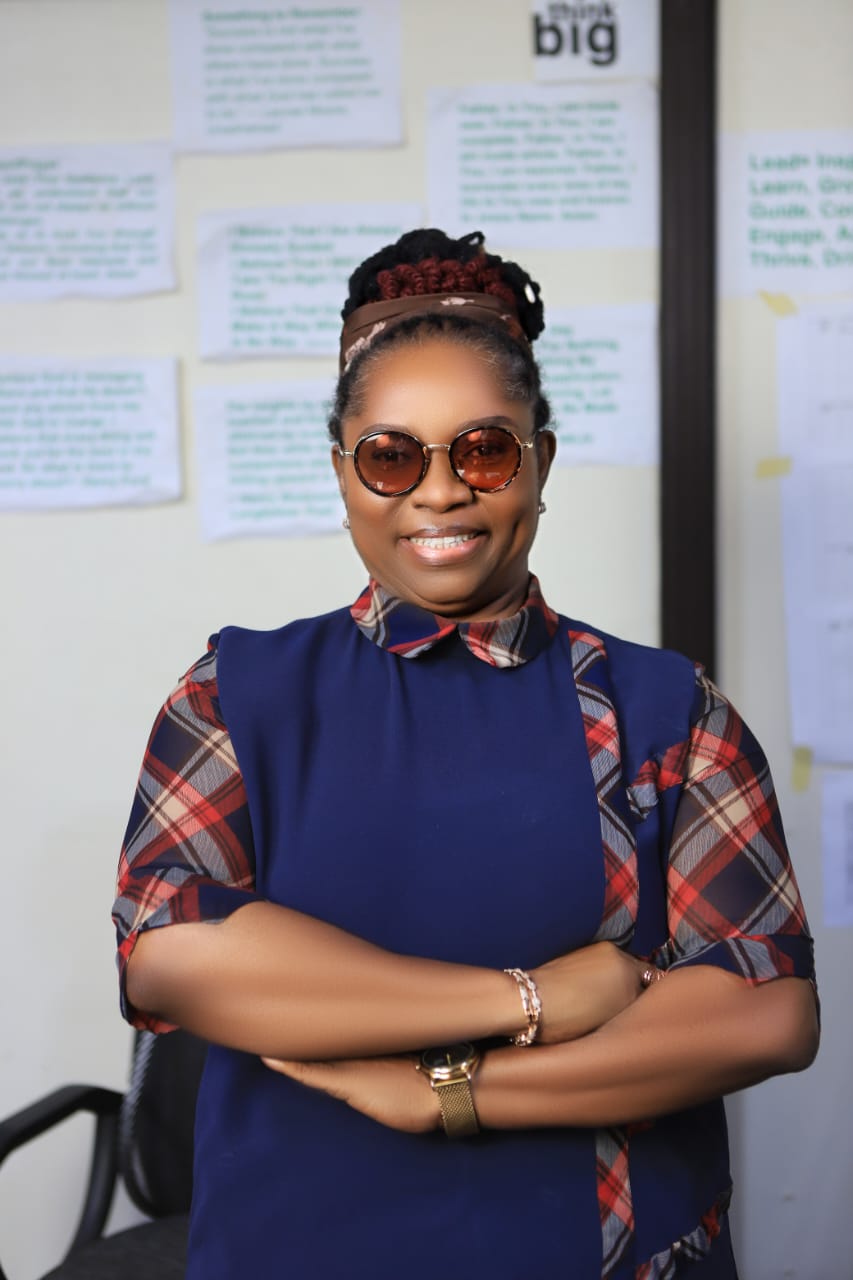
What sixty years taught her, told the way she tells it — press the seal and she says it herself.
Lesson 1 of 60
0 of 60 heard · 15 min of her voice
Press the seal. She will speak.
Lesson one · 0:17
People remember the things that you said, how you developed them, how you helped them. They wouldn't remember your title, your designation, the deadlines that you achieved, the decisions that you took. They remember how you make them feel.
Hear her say it
1. People remember the things that you said, how you developed them, how you helped them. They wouldn't remember your title, your designation, the deadlines that you achieved, the decisions that you took. They remember how you make them feel.
2. The greatest thing you can do is to impact positively on people, to help people become better, to leave people better than they met you. For me, that's the ultimate.
3. You know, I also learned that we should treat people fairly, not equally, fairly, not equally.
4. I learned to correct in love without destroying the person.
5. So what achievement means the most to me? To be honest, seeing people I mentored, struggled and eventually overcome and become better is my greatest achievement.
6. But then one of the things I also learned is this emotional intelligence. Emotional intelligence is the greatest legacy that you can have. Yes, it is a bridge between success and legacy.
7. But above all, while in service, while in this retirement, I have come to realize and I learned that people remember how you feel, how you make them feel.
8. I also learned to listen before judging.
9. I learned that not every battle is worth fighting, honestly. To be honest, there are some things that I won't dissipate energy on.
10. And I learned not to be scared to develop people who may eventually become better than me. Yeah, I learned that too.
11. I would say that the difficult moments taught me resilience. The people who believed in me taught me confidence. The people who challenged me taught me courage. My family taught me…
12. But one of the things I learned was the fact that wealth is actually not what you have in your, in your hands, but the value that you carry in your hand, in your hand in terms of money, having money in the bank, we probably didn't have it, but we had values, you know,…
13. I have been privileged to help also taught me that the greatest measure of a life is not what we accumulate, what we have in the bank. No, it's not. It is about what we give.
14. In people, you know. And I also realized that success is not about your title. You know, that assignment taught me a lot. Success is not about title. It's about the people that you have been able to mentor, to follow you, to go all out, to give you all the support…
15. Difficulties and challenges I experienced early in life were not designed to actually delay me or destroy me or disappoint me, but they were quietly preparing me for the person that I am, so all these challenges I would say built my resilience, the responsibility, built my discipline, disappointment, built my courage, and the people who believed in…
16. My power to leave a good lasting impression the first time whenever I meet anyone, you know, at least let there be something the person will remember you for good when you leave that person. It's because of the values, because of the favors that I received from people.
17. It was a collection of moments. You know, some of those moments were joyful, some painful, some unexpected, some challenging, but all in all, they gradually shaped my character.
18. I also learned how to be strong and calm under pressure.
19. That one of the things I learned from my dad was not just taking decisions, but ability to take decisions promptly. My dad used to say one thing, he said, "Take the decision, let it be a wrong one, than that you don't take any decision at all or that you delay."
20. He used to tell me that ask questions, speak up, the much that can happen is that people will laugh at you, but you would have received the information you are seeking for. So go all out and seek for information.
21. As a child, as a young adult and as a professional, you know, I learned in the course of managing people that people are not machines, they are individuals with unique strengths and weaknesses.
22. You need to give a listening ear. You need to put yourself in the position of that person to feel, to understand what the person is actually going through for you to be able to make a decision or make a statement.
23. I also realized that you need a lot of patience. I used to be growing up up until my secondary school, I used to be very short-tempered or hot-tempered, very impatient. You know, I like people to move at my pace, you know, but I learned that in my professional career that won't happen. Everybody, they have their own pace.
24. And I tell you, valuing people and making friendship, being of service really paid off. Most of the favors and support that I got are actually from people that I never knew from anywhere, you know, I never knew them from even up until now.
25. You know, the people must understand why you are correcting them. It's not just that you want to destroy their personality, you want to kill their self-confidence, self-esteem. That's not correction.
26. You know, I call it positive criticism. I learned to give positive criticism, you know.
27. I learned that people have different backgrounds, different motivations, you know, so leadership requires me being able to understand the peculiarities and the uniqueness of each person and see how to bring out the best.
28. And so for me, it's a responsibility to encourage them in their area of strengths to improve and then help them to overcome their weaknesses.
29. This is very important because perception for me, yeah, is there, but you have to be fair to people.
30. And so, it doesn't, if I would help you to get better than me, why not? I'm not scared.
31. Yes, well, it is good to say that it is, but you would ask yourself, saying it as it is, what has it achieved?
32. Honestly, I've always known that I would be a leader, you know. I have always known that. How do I know? Because of what my father instilled in me. Because of the responsibility that was given to me at an early age.
33. So I would say that I will categorize the decisions I made to include decision to learn and keep learning, decision to work hard, decision to lead, take up responsibility, decision to serve and mentor others, and then decision to leave a legacy and decision to plan for retirement.
34. Service to others, mentoring young people, you know, assisting in whatever way that I could, but was importantly investing in young people.
35. And it showed me the power of collaboration, the power of mentorship, the power of believing…
36. I would say that finding my voice in a male-dominated professional environment was a little bit of an issue, but then I wasn't scared actually, because my childhood days, my father prepared…
37. And one of the ways I handled it, like my father also taught me anything that doesn't concern you, don't get involved. So I honestly don't care what you think or what you say, as long as you don't bring it to my attention, I assume that it doesn't exist.
38. So I was able to shut down on all of that, you know, office gossip, office politics and try as much as possible to stay neutral and be above board.
39. You know, yes, as a human being, you can't really have a perfect balance between the two, but I learned that I need to build space, you know, in both spaces, rather, that I need to function in both spaces and do the best that I could.
40. So yes, those issues were there, but honestly, I can't thank my dad enough for those values at that time.
41. Of the things my dad taught me was that anything you sign gives, tells the next person your kind of personality and who you are. So you must be careful, you must check what is it that you're signing off.
42. Yeah, because I learned that from my dad, you know, defending what I believed was right.
43. So for me, wanting to read law at that time was given by both personal ambition and then a desire to make meaningful difference in people's lives.
44. My dad never missed my visiting day.
45. I learned from my parents, especially my dad. I used to talk very late into the night with my dad. My dad told me so many things, you know, spiritual things, traditional things,…
46. Trained me as an early age, I learned to take responsibility right from primary school,…
47. So learning at that early age to distinguish between what I need and what I want, very…
48. So I was told that when people run to our house for refuge, I used to share when they give food, I used to share food, and then I would sit down and they ask me, "So what…
49. So during holidays, any money you get, people give you, you know, aunties, uncles that will come and drop in some things. And then she, when she makes her sales and all those lessons, she would share every month, she shares the money into everybody's container. So when it is time to go back to school, is all of those money my mom would pick and then…
50. At any point in time, we had people living with us. I think I took that from her, too, because at my own time, at some point in my home, I had over nine, ten people living with me, and these are people that were not connected to.
51. I used to gather people in the library, I taught each other. The library was also very close to my school. I kind of mobilized people, got people interested in reading in the library and all that.
52. Know, so having to live a familiar zone, building relationships, adapting to different people and different culture, in fact, when I joined Gulf Bank, my first posting was an internal audit and in the internal audit, we had, we were 12, 11, we are from a particular tribe, I was the only outsider, but my God's providence and my people's nature, I was able to find…
53. I worked. So, you know, the way we thought, people are always running away from auditors, but I happen to be the one that was willing to help them again, all in the bid to give service. So I would help them do some calculation, help them get. So one of those days, the partner…
54. Asked me, have you ever considered doing ICAN? I said, yes, I have bought this ICAN form for almost six years now. So I said, what was the problem? I said, the challenge is that I don't know anybody in Lagos that accounting firm that would be signing the form. So beside Ijeoma said, no, my company, my firm will do it for you. You just go process the form.
55. In December 2005, people were asked to leave the bank. And interestingly too, in that December 2005, three people were promoted in the bank. And I was one of the three. About the third week of December, almost everybody was asked to go. The three of us remained.
56. So when Gulf Bank went under, I could see the money I have in the bank, but I couldn't get it, couldn't take it. You know, that was also a big lesson learned.
57. And, you know, going from the learnings of the Gulf Bank Liquidation, I told myself that any next organization I get into, if they have opportunity for staff loan, I'm going to take all the loans possible. And that's exactly what I did.
58. Of course, the issue here, I must clear, is not just taking loan, but you must be able to invest that loan properly. That loan must be able to yield return. That's the only way it can make sense and I'm glad that I took that opportunity.
59. So that night I got home, I just cried, I just told God, please help me, you know, and God's providence subsequent days, I began to understand it.
60. Love and sacrifice, and my career taught me leadership and responsibility. And the people…
Extracts from her recordings, made while telling her story.